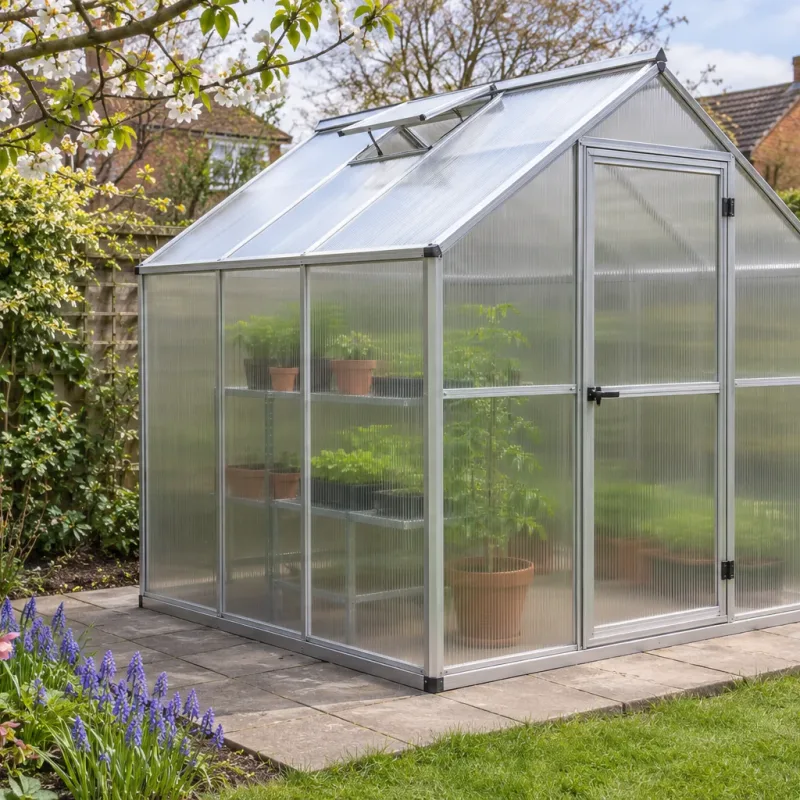
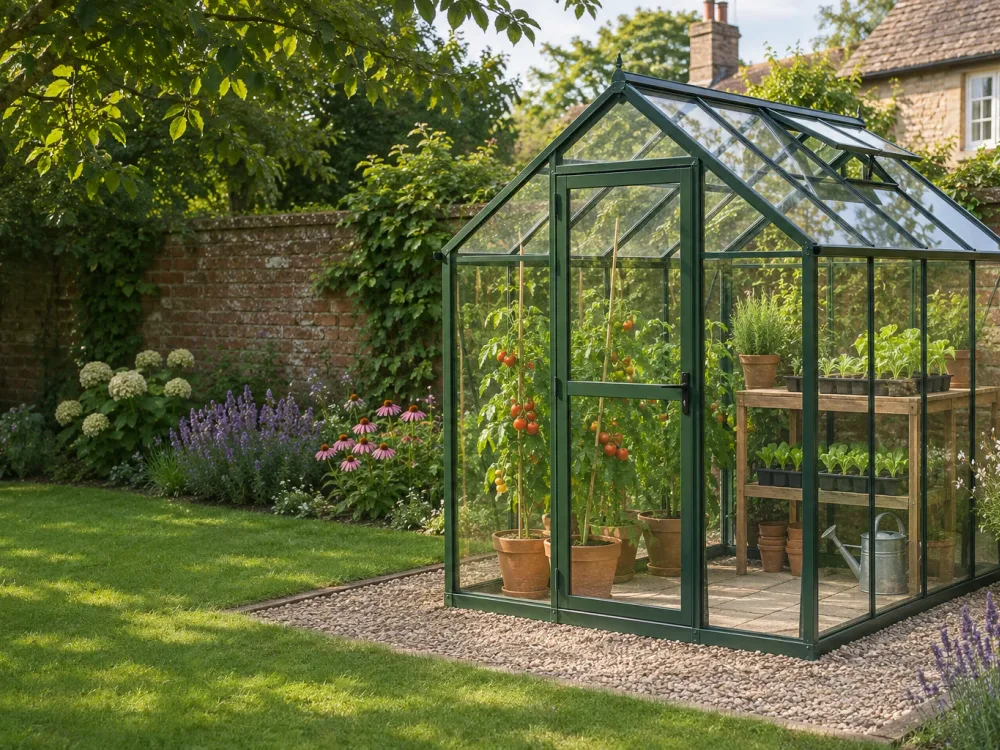
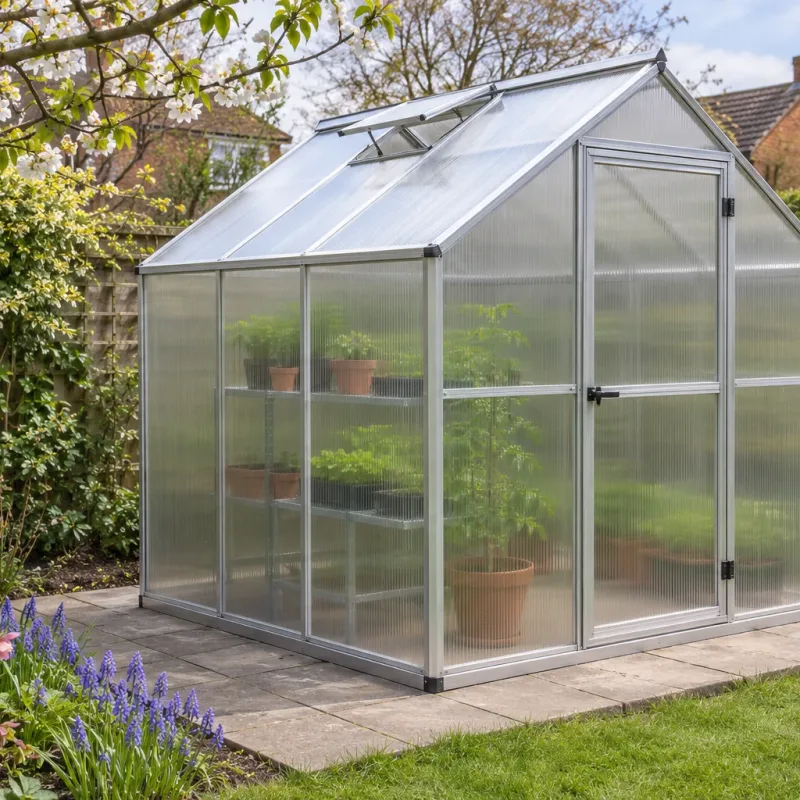
A well-proportioned wooden greenhouse in a British garden with clear glazing, roof vents and a prepared base
Wooden greenhouse guidance · United Kingdom

Wooden Greenhouses

Compare timber frames, glazing, sizes and maintenance needs before choosing a greenhouse for your garden.

✓Independent buying guidance ✓Founded in 2026
Start with the structure

Choosing a Wooden Greenhouse for a UK Garden

A wooden greenhouse combines a traditional appearance with a frame that can support shelves, staging and plant ties. It may suit a cottage garden, a period property or any setting where an aluminium structure would look too stark. Timber does, however, need more care than metal. The right choice depends on the wood species, frame construction, glazing, base and ventilation rather than appearance alone.

Greenhouse Guide UK is an independent buying-guide and comparison service founded in 2026 by Stephen Meredith. We compare clearly sourced product specifications and retailer offers so UK gardeners can judge like-for-like options. We do not manufacture, sell, install or deliver greenhouses. Any purchase takes place with the retailer, and prices, stock, delivery coverage and warranty terms should be confirmed with that retailer.

Before settling on timber, compare it with the wider range of greenhouses, particularly if low maintenance, lighter components or a limited budget matter more than a traditional finish.

Book Your Free Inspection
Inspect the construction

Wooden Greenhouse Frames: What to Compare

The timber species and its treatment affect how much care the frame needs. Western red cedar is naturally durable and often sold unfinished or with a clear finish that allows its colour to weather gradually. Pressure-treated softwood is another common option. Treatment helps resist decay, but cut ends, joints and areas close to the base still deserve attention. Retailer descriptions such as “treated timber” are less useful than a specification naming the wood, treatment and recommended care.

Look closely at the frame rather than relying on its external dimensions. Thicker glazing bars and well-braced corners can add rigidity, while tightly packed bars reduce light and make cleaning more involved. Check the door construction, roof-vent mechanism, ridge connection and how the frame fixes to its base. On larger models, confirm whether internal bracing or tie bars are included.

A timber greenhouse should sit on a level, square and load-bearing base. Common choices include a concrete perimeter, paving or a suitable proprietary base fixed to firm foundations. Timber must not be left in regular contact with wet soil. Follow the manufacturer’s base drawing because nominal greenhouse sizes do not always match the exact foundation dimensions.

Close view of a timber greenhouse corner showing glazing bars, a treated frame joint, glass retention and base fixing
Book Your Free Inspection
Compare practical details

Glazing, Ventilation and Everyday Use

Toughened safety glass

Full-length toughened panes give a clean appearance and avoid overlapping sheets. If broken, toughened glass is designed to fragment into small pieces rather than large sharp shards. Confirm the pane thickness and whether it is included throughout the greenhouse.

Horticultural glass

Traditional horticultural glass is usually supplied in smaller overlapping panes. It transmits light well and can be economical, but broken panes create sharp pieces. Check how each pane is retained and whether replacement sizes are readily available.

Polycarbonate glazing

Twin-wall polycarbonate is lighter than glass and diffuses incoming light. Its channels must be oriented and sealed as specified so moisture and debris do not collect inside. Ask whether the panels are UV-protected and how they are fixed against wind.

Roof ventilation

Opening roof vents release rising warm air. Compare the number and position of vents, not merely whether ventilation is listed. Automatic vent openers are useful when nobody is available to respond to changing daytime temperatures.

Low-level airflow

Louvre vents and open doors admit cooler air at a lower level. Good airflow helps manage heat and humidity, but exposed openings may need insect mesh where pests are a concern.

Doors and access

Check the clear opening rather than the overall door width. A low or level threshold is easier for a wheelbarrow, while sliding doors avoid taking up space beside narrow paths.

Plan the growing space

What Size Timber Greenhouse Do You Need?

Choose size according to the crops, internal layout and working space you will actually use. A compact greenhouse can accommodate seed trays and a few tomato plants, but staging quickly consumes the available width. Mark the proposed footprint with string, then allow for the open door, water butts, maintenance access and a safe path around the outside.

Width changes usability as much as length. Before buying, sketch the staging and beds to scale. Include a central path wide enough for comfortable movement and check whether sloping eaves restrict tall plants or shelves. If you expect to overwinter tender plants, reserve uncluttered floor area rather than counting every corner as growing space.

Orientation is a balance between sunlight and the realities of the garden. Avoid deep shade where possible, but also assess exposure to strong winds, overhanging branches and water running towards the base. Across the UK, short winter days make available light valuable. Shelter can reduce wind exposure, provided nearby fences, hedges and buildings do not create persistent shade or block access for cleaning.

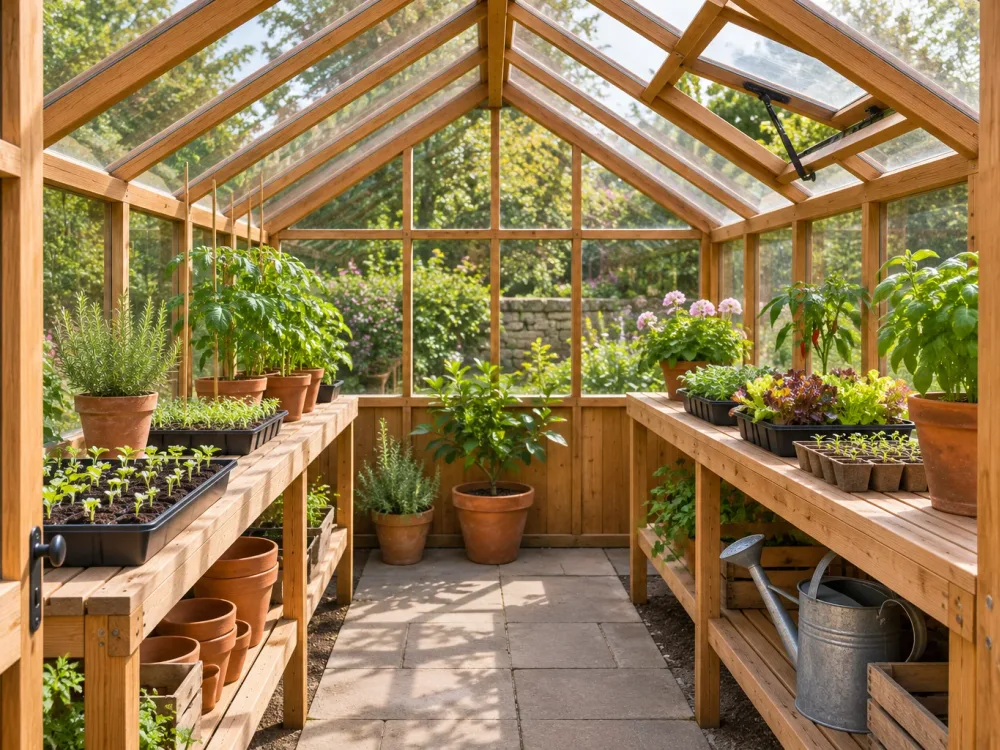
Interior of a medium-sized wooden greenhouse with a central path, timber staging, raised beds, roof vents and room for tall crops
Book Your Free Inspection
Compare in a consistent order

How to Compare Wooden Greenhouses

  1. Measure the position

    Record the usable footprint, access route and nearby obstructions. Check that packaged components can reach the garden through gates, passages or the house.

  2. Set your growing plan

    List the crops, propagation work and overwintering you intend to do. Use this to decide the required width, eaves height, staging and ventilation.

  3. Compare complete specifications

    Check timber species, treatment, glazing type, vent count, door opening, base requirements and included fittings. Similar-looking models may include very different equipment.

  4. Review delivery and assembly terms

    Confirm whether delivery is kerbside or to the garden, whether glass arrives separately and whether assembly is offered in your postcode. Greenhouse Guide UK does not install or deliver products.

  5. Check the retailer’s current terms

    Verify the final price, stock status, lead time, returns policy and product warranty before paying. Keep the order record and the manufacturer’s care instructions.

Book Your Free Inspection
Protect the frame

Caring for a Timber Greenhouse

Inspect the frame at least seasonally and after severe weather. Pay particular attention to the bottom rails, door threshold, glazing bars, joints and any end grain. Clear leaves and soil away from the base, keep gutters flowing and deal with leaking panes or failed seals before water repeatedly reaches the timber.

Maintenance depends on the product. Some cedar frames are intended to weather naturally, while treated softwood may require a compatible preservative or decorative finish after a stated interval. Follow the manufacturer’s instructions. An unsuitable coating can trap moisture, interfere with future treatment or affect warranty terms. Apply finishes in dry conditions and protect glazing, metalwork and plants from drips.

Wash glazing with an appropriate mild cleaner and soft equipment. Do not lean heavily on glass or roof bars. Check pane clips, capping, seals and automatic vent openers as part of the same job. Replace damaged glazing using the specified material and dimensions, and use suitable protective equipment when handling glass.

Condensation does not automatically mean the frame has failed. It often indicates warm, moist air meeting cold glazing. Ventilation, careful watering and adequate plant spacing can reduce prolonged humidity. Persistent water entry around a joint, roof or pane needs separate investigation.

Book Your Free Inspection
Look beyond the finish

Details Worth Checking Before Purchase

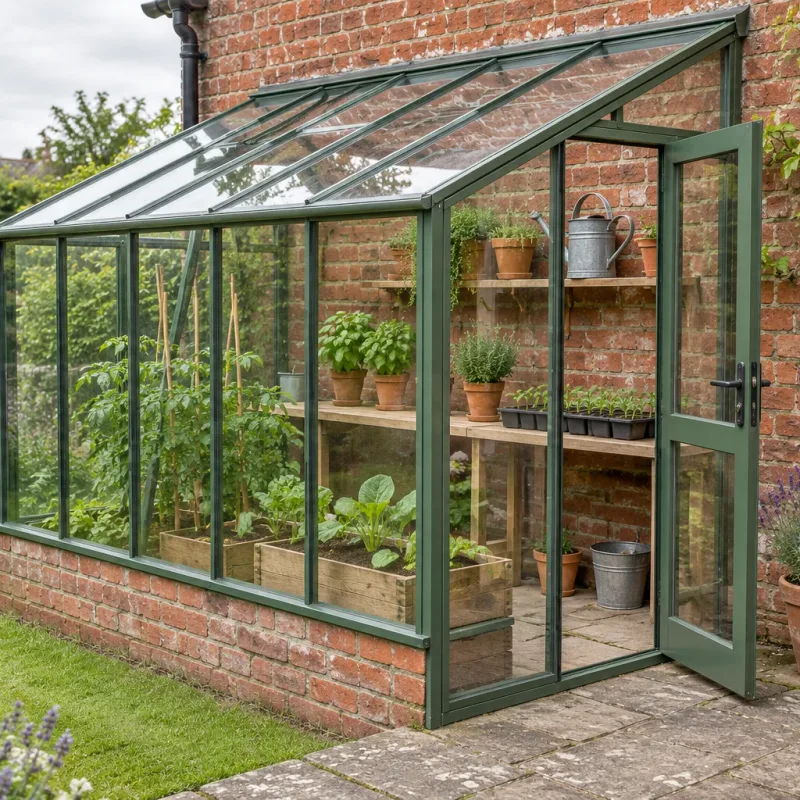
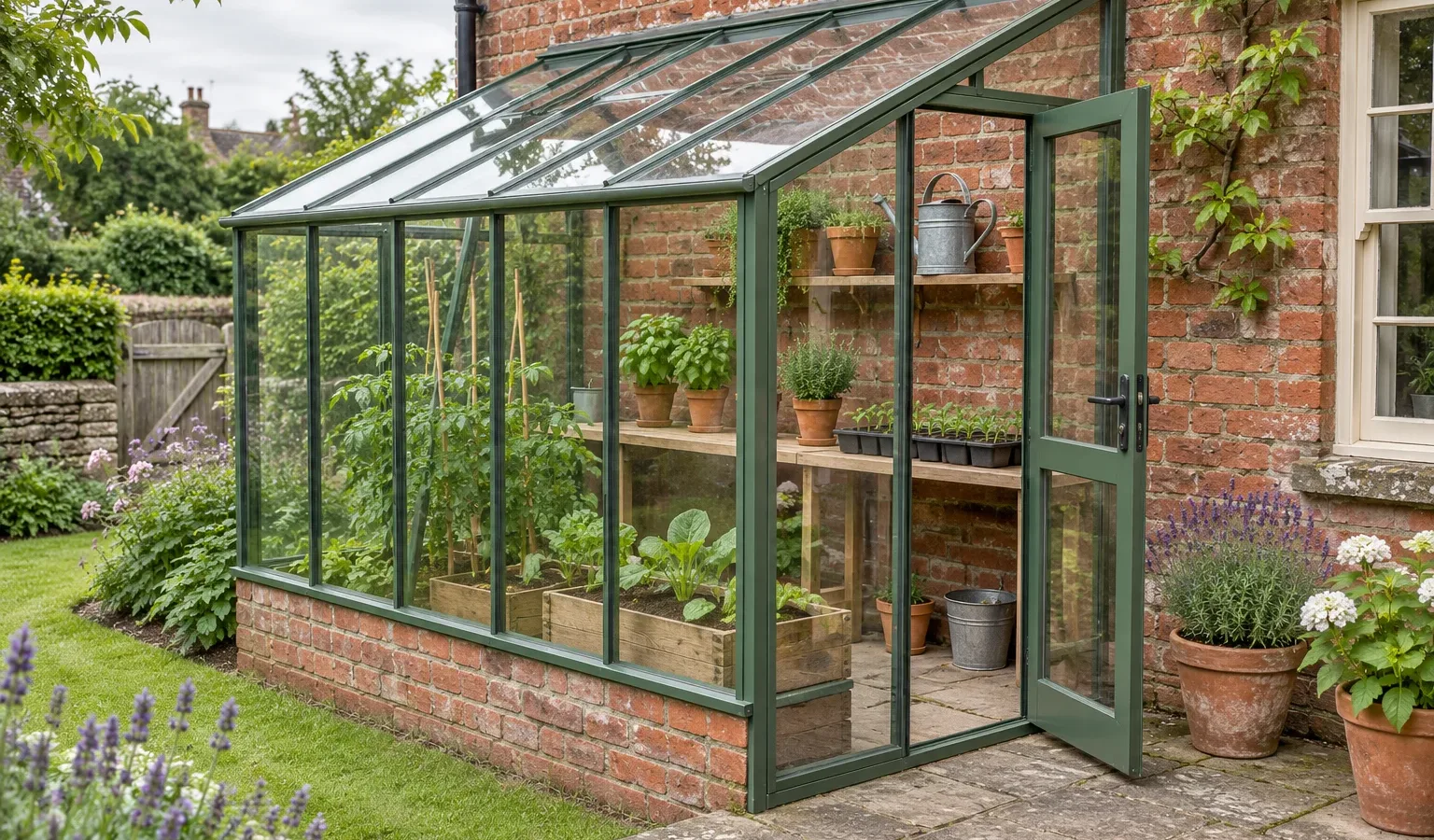
A compact lean-to wooden greenhouse and a freestanding timber greenhouse showing their different footprints
Match the structure to the available position and access.
Wooden greenhouse roof vent with an automatic opener alongside a low-level louvre vent
High and low ventilation support more effective airflow.
Greenhouse base detail showing timber clear of soil and securely fixed to a level masonry perimeter
A square, stable base supports reliable door and glazing alignment.
Book Your Free Inspection
Practical answers

Wooden Greenhouse Buying Questions

How much does a wooden greenhouse cost in the UK?

The price varies widely with size, timber, glazing and included equipment, so current retailer quotes are more reliable than one general figure. Cedar usually carries a different price from treated softwood, while toughened glass, extra vents, staging, a base, delivery and assembly can raise the total. Compare the complete delivered specification and confirm whether VAT and any postcode surcharge are included.

Is a wooden greenhouse suitable for an exposed garden?

It may be suitable if the chosen model is specified for the position and is securely fixed to a suitable foundation. Assess prevailing wind, nearby trees and wind funnels between buildings. Ask the manufacturer or retailer for anchoring requirements and any stated wind limitations; do not assume a heavier timber frame can be placed on loose slabs or soil.

Does a timber greenhouse need planning permission?

Many domestic greenhouses can fall within permitted development rights, but the answer depends on the property, structure and location. Different rules or restrictions can apply to listed buildings, designated land, flats and properties whose permitted development rights have been removed. Planning systems also differ across England, Scotland, Wales and Northern Ireland, so confirm the position with the relevant local planning authority before ordering.

How often should the timber be treated?

Use the interval and product stated by the greenhouse manufacturer because timber species and factory treatments differ. Inspect exposed surfaces, joints, end grain and lower rails regularly rather than waiting for a fixed date. Cedar may be allowed to weather naturally, while another frame may require a compatible preservative to retain its finish or meet care conditions.

Is glass or polycarbonate better for wooden greenhouses?

Glass suits buyers who prioritise clarity and a traditional appearance, while polycarbonate is lighter and diffuses light. Toughened safety glass reduces the hazard associated with large sharp fragments, and twin-wall polycarbonate adds an insulating air space. The better choice depends on safety, exposure, appearance, replacement availability and the frame’s approved glazing system.

Can Greenhouse Guide UK arrange delivery or installation?

No. Greenhouse Guide UK provides independent comparisons and editorial guidance but does not sell, deliver or install greenhouses. Delivery coverage, access requirements, assembly services and after-sales support belong to the retailer or manufacturer, so confirm those terms before purchase.

What should I check when comparing retailer offers?

Compare the exact model code, external dimensions, glazing, base, vents, door hardware and accessories included in the advertised price. Then check delivery charges, postcode exclusions, estimated lead time, returns terms and warranty wording. A lower advertised price may cover a different glazing package or omit items shown in product photography.

Compare Your Wooden Greenhouse Options

Tell Greenhouse Guide UK about your available space, preferred glazing and growing plans. We can help you identify the specifications worth comparing before you choose a retailer.