Light
Clear glass provides a bright interior and direct light. Twin-wall polycarbonate scatters incoming light, which can reduce harsh shadows and spread illumination more evenly around foliage.
Serving United Kingdom & surrounding areas
Est. 2026
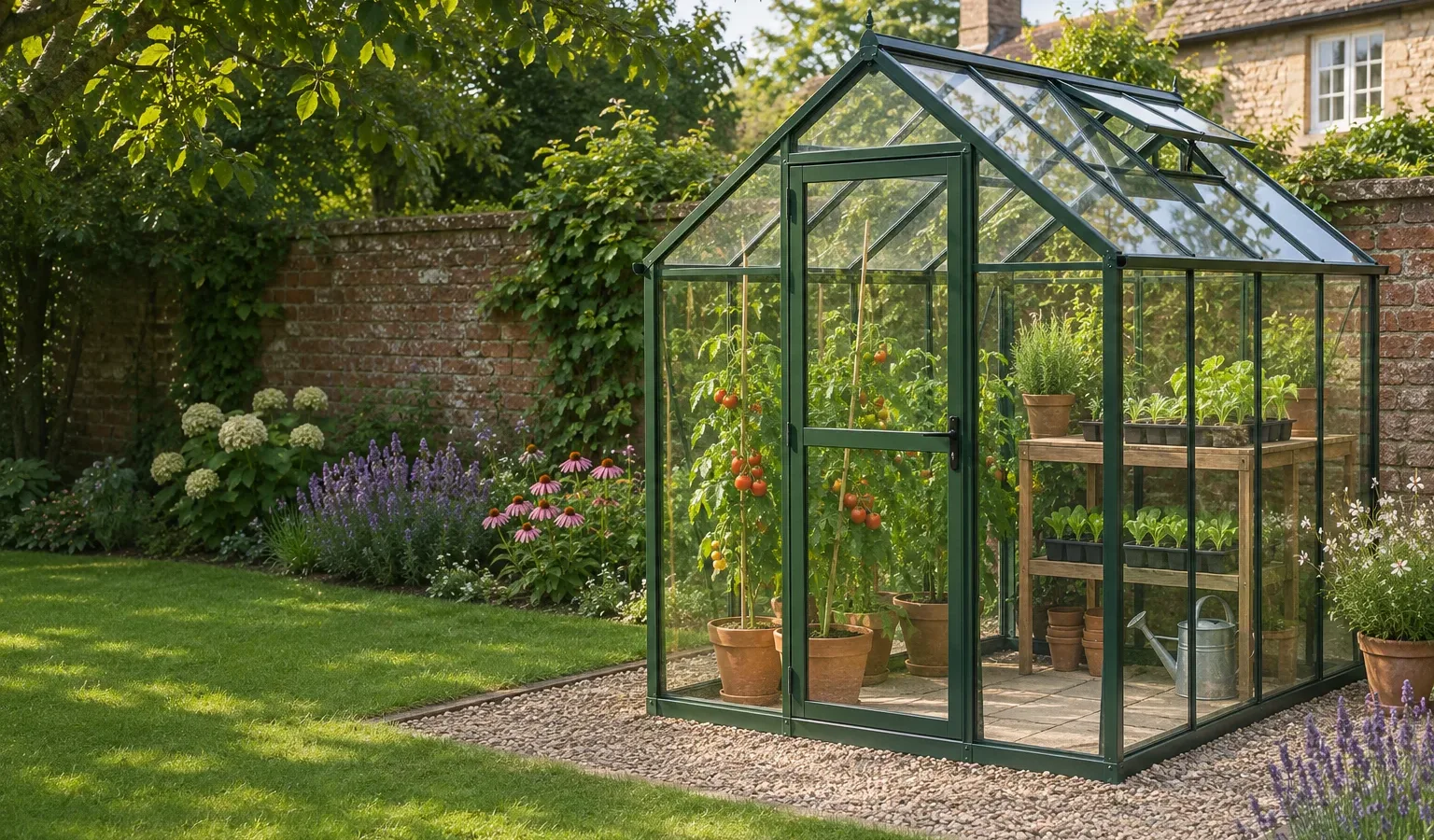
Compare light transmission, heat retention, durability and upkeep so you can choose glazing that suits your plants, garden and budget.
For maximum clarity, a traditional appearance and an unobstructed view of your plants, choose glass. For better insulation, lower panel weight and safer handling around children or active gardens, polycarbonate is usually the stronger choice.
That simple answer needs some context. Glass lets in abundant direct light, remains clear with proper care and resists scratching. Polycarbonate diffuses light, reduces heat loss and does not shatter like horticultural glass, but its appearance and useful life depend heavily on panel quality, installation and maintenance.
Greenhouse Guide UK is an independent buying-guide and comparison business founded in 2026 by Stephen Meredith. We compare clearly sourced product specifications and explain what they mean for UK gardeners. We do not sell, manufacture, install or deliver greenhouses, and purchases take place with the chosen retailer. When comparing greenhouses in the UK, check the complete specification rather than judging a model by glazing material alone.
Clear glass provides a bright interior and direct light. Twin-wall polycarbonate scatters incoming light, which can reduce harsh shadows and spread illumination more evenly around foliage.
Multiwall polycarbonate traps air within its channels and generally retains heat better than single-pane horticultural or toughened glass. This matters when extending the growing season or using greenhouse heating.
Polycarbonate is impact-resistant and will not break into sharp shards. Toughened safety glass is stronger than horticultural glass and is designed to granulate into smaller pieces if broken.
Glass gives a crisp, traditional finish and lets you see plants clearly. Polycarbonate has visible ribs or internal channels and provides a more screened view.
Polycarbonate panels are much lighter than glass, making them easier to handle. A lightweight greenhouse still needs a level, secure base and proper anchoring against wind.
Glass is straightforward to wash and is relatively scratch-resistant. Polycarbonate needs gentler cleaning, and its open channel ends must be correctly sealed to control dirt, algae and condensation.
Glass is the natural choice when clarity and high direct-light transmission are priorities. It is useful during short UK winter days, particularly in an open position where nearby buildings and trees already limit sunlight. Glass also preserves a clear view into the greenhouse, which many gardeners value when the structure is a focal point.
Polycarbonate changes the character of the light. Twin-wall and multiwall sheets diffuse sunlight as it passes through their internal structure. Diffuse light reaches leaves from more angles, softens shadows and can reduce localised scorching during strong sunshine. The trade-off is lower clarity and, depending on the sheet specification, less total transmitted light than clear glass.
Do not compare products on a vague claim such as “polycarbonate glazing”. Look for panel thickness, wall construction, light-transmission data and whether the sheet has a UV-protected face. The protected face must point outwards. For either material, position usually has more effect than a small difference between headline transmission figures: avoid persistent shade where possible, while accounting for summer exposure and nearby trees.
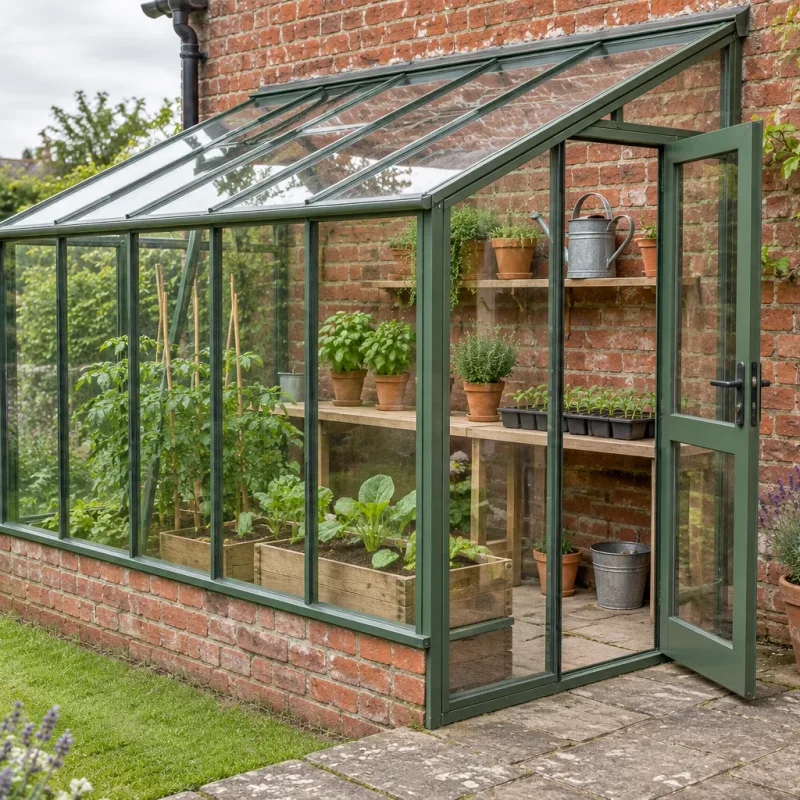
Clear glass transmits direct light, while multiwall polycarbonate spreads it.
Book Your Free InspectionMultiwall polycarbonate is the better insulator because the spaces between its layers trap air. Single-pane glass has no comparable air chamber. The difference can reduce overnight heat loss, but glazing cannot compensate for gaps around doors, loose vents or a poorly fitted frame.
Better insulation does not mean stable temperatures without ventilation. Both materials can produce very high daytime temperatures in sunny weather, even when the air outside feels mild. Roof vents let rising hot air escape, while louvres or low-level vents admit cooler air. Automatic vent openers are useful when nobody is available to respond to rapid temperature changes.
Condensation is normal when warm, moist greenhouse air reaches a cooler surface. Glass makes droplets easy to see and clean. Polycarbonate can also collect moisture inside its channels if the sheet ends are incorrectly finished or the drainage orientation is wrong. Installation commonly uses a sealed tape at the upper end and a breathable anti-dust tape at the lower end, subject to the panel manufacturer's instructions. The channels should run vertically so moisture can drain.
Wind is a major buying consideration across the United Kingdom, especially in exposed coastal, upland and open rural gardens. Glass is rigid and keeps its appearance well, but individual panes can break through impact or frame movement. Standard horticultural glass usually breaks into sharp pieces. Toughened safety glass costs more, yet it is stronger and breaks into small granules rather than large shards.
Polycarbonate tolerates impact well and is a sensible option near play areas, footballs, overhanging branches or busy paths. Its low weight, however, means panels must be securely retained. Thin sheets can flex, and badly fitted panels may be vulnerable to lifting in gusts. Check the frame's wind-related guidance, panel-retaining system and anchoring requirements rather than assuming that unbreakable glazing makes the whole greenhouse storm-proof.
Snow also needs practical thought. Neither glazing type removes the need to follow the manufacturer's loading and maintenance instructions. Keep gutters clear, inspect fixings and avoid allowing heavy accumulations to remain on the roof. A square, level base helps doors operate properly and prevents twisting that can stress glazing.
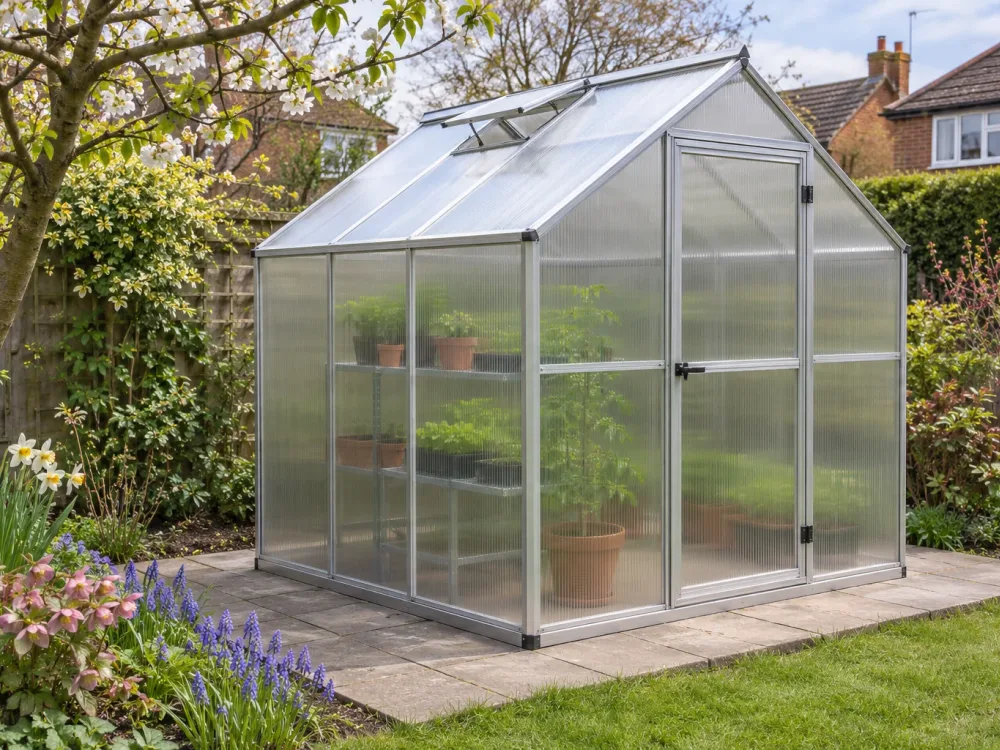
Frame strength, panel retention and anchoring matter as much as glazing choice.
Book Your Free InspectionGlass suits gardeners who want clear views, a classic appearance and a surface that resists everyday scratching. Toughened safety glass is preferable where breakage risk is a concern.
Impact-resistant panels are well suited to gardens used for play or regular activity. They are lighter to handle and avoid the sharp fragments associated with broken horticultural glass.
Gardeners starting seedlings early or growing later into autumn may value improved insulation. Compare panel thickness and construction rather than relying on the material name.
A sheltered site, sound base, suitable frame and secure anchoring are essential. Light polycarbonate panels and glass panes can both fail when the structure is badly assembled or inadequately fixed.
Note sun exposure, shade, prevailing wind, overhanging branches and the distance from paths or play areas. These conditions help determine whether clarity, insulation or impact resistance deserves priority.
Separate horticultural glass from toughened safety glass, and distinguish solid polycarbonate from twin-wall or multiwall sheets. Record panel thickness and any stated light-transmission or UV-protection details.
Check the frame material, bracing, glazing clips or capping bars, door construction and anchoring method. A good glazing material cannot correct a weak or poorly secured structure.
Confirm the required base dimensions before purchase. Compare roof vents, louvres and compatibility with automatic openers, staging and shading.
Check whether the advertised price includes the base, delivery, vents and other accessories. Read the retailer's current delivery, returns and warranty terms before paying.
A useful comparison starts with exact glazing, frame and ventilation specifications. Greenhouse Guide UK helps gardeners assess those details before choosing a retailer.
Book Your Free InspectionNeither material is best for every UK garden: glass favours clarity and direct light, while multiwall polycarbonate favours insulation and impact resistance. In exposed locations, the frame, base, panel retention and anchoring should carry as much weight as the glazing. Both types also need enough ventilation for sunny days.
The final price depends on the glazing grade, frame, size and included accessories rather than the material name alone. Basic polycarbonate models can have a lower entry price, while thick multiwall panels may cost more than expected. Toughened safety glass generally commands a premium over horticultural glass. Compare like-for-like specifications, delivery charges, bases and vents.
Good-quality greenhouse polycarbonate should admit useful growing light, although it is less clear than glass and its exact light transmission varies by specification. Its diffused light can reduce hard shadows. In a heavily shaded UK garden, the lower transmission may matter more, so check the manufacturer's stated figure and prioritise the sunniest practical position.
Their service life depends on sheet quality, UV protection, installation and exposure, so there is no single reliable lifespan for every panel. Confirm which face has UV protection and install it outwards. Correctly tape the channel ends, use compatible fixings and avoid abrasive cleaners that can scratch the surface.
Toughened safety glass is worth considering where people frequently pass the greenhouse or where children and pets use the garden. It is stronger than horticultural glass and granulates if broken. Confirm that the retailer means fully toughened glass, rather than horticultural glass held with safety film.
Replacement is often possible, but the new panels must suit the frame, glazing bars and retention system. Polycarbonate expands and contracts with temperature and should be cut and fixed according to its manufacturer's allowance. Check thickness, sheet orientation, UV face, edge tapes and whether new clips or capping bars are required.
Glass is generally easier to clean and more resistant to scratches, while polycarbonate needs a soft cloth or sponge and a manufacturer-approved mild cleaner. Avoid abrasive pads and harsh chemicals. With multiwall sheets, correctly finished channel ends help stop insects, dirt and algae entering spaces that are difficult to clean.
No. Greenhouse Guide UK is an independent buying-guide and comparison business and does not sell, manufacture, install or deliver greenhouses. Stephen Meredith founded the business in 2026 to help UK gardeners compare sourced product specifications and understand their practical implications. Purchases are completed with the selected retailer.
Tell Greenhouse Guide UK about your garden position, growing plans and priorities, and use a specification-led comparison to narrow down suitable greenhouse options.