
Manual roof vents
Simple stays let you set the opening yourself. They suit gardeners who can check conditions regularly, but vents must be adjusted when the weather changes and secured against strong wind.
Serving United Kingdom & surrounding areas
Est. 2026
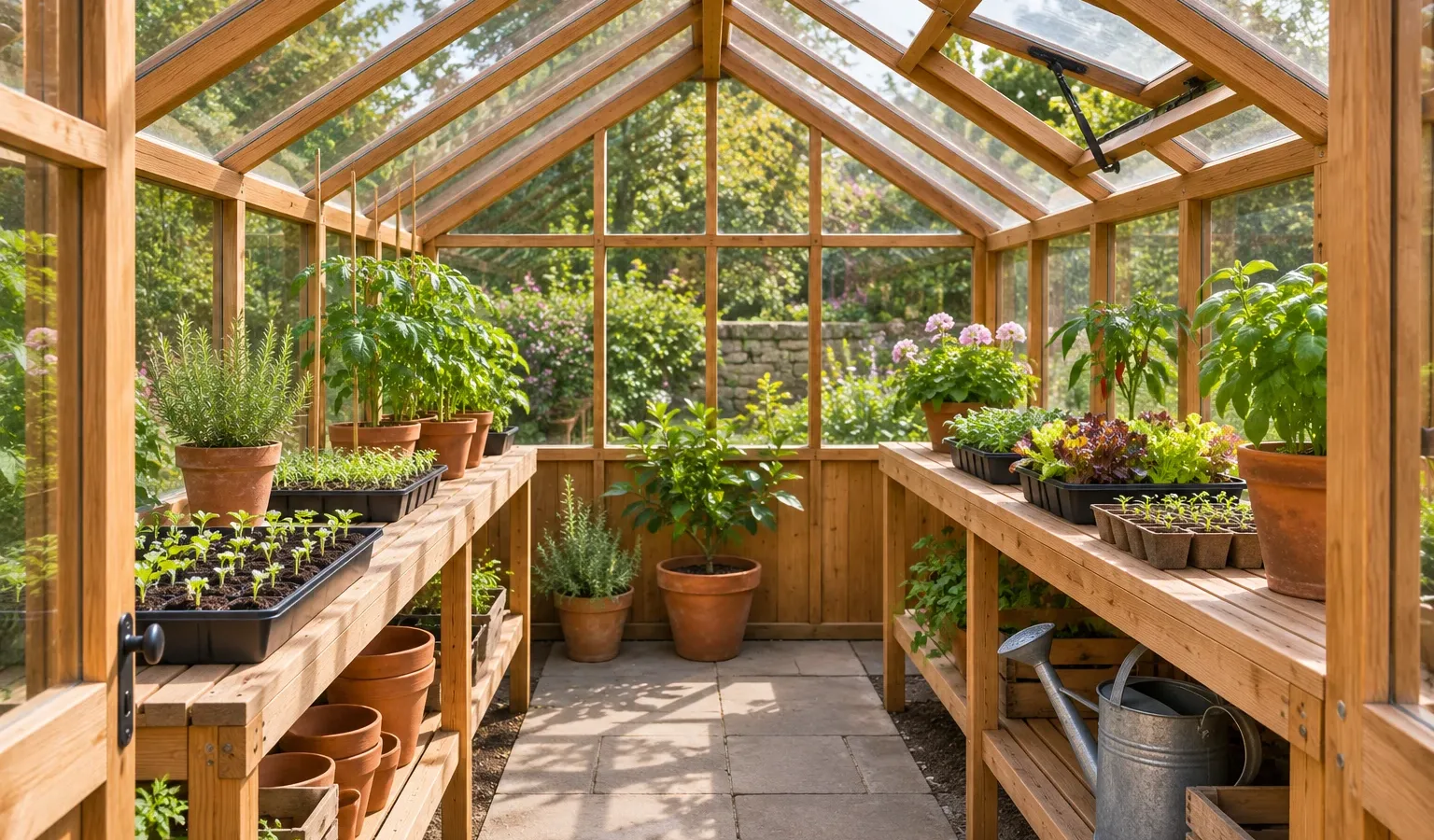
Plan vents, airflow and shade around your greenhouse, plants and local conditions so heat and humidity are easier to manage through the growing season.
Greenhouse ventilation releases excess heat and humid air while drawing in replacement air. It can make conditions easier to manage, reduce persistent condensation and support transpiration, but the right arrangement depends on greenhouse size, glazing, exposure and planting.
Greenhouse Guide UK is an independent buying-guide and comparison business founded in 2026 by Stephen Meredith. We compare clearly sourced product specifications and explain how ventilation options differ. We do not sell, manufacture, install or deliver greenhouses; purchases take place with the retailer you choose.
Ventilation and shading need to be considered together. Vents exchange air, whereas shade limits the solar gain that causes rapid heating. Fans may improve circulation or assist air exchange, but they do not remove the need to control incoming sunlight. Before choosing equipment, note where the sun falls, whether nearby buildings or hedges restrict wind, and which plants will occupy the greenhouse. Anyone still choosing the structure can compare greenhouses for UK gardens alongside glazing, base and ventilation specifications.
Warm air rises, so high-level roof vents provide an escape route. Cooler replacement air enters through lower openings such as louvre vents, side vents or an open door. This low-in, high-out arrangement uses the stack effect and is generally more useful than relying on one opening alone.
Opposing openings can also support cross-ventilation when outdoor air moves through the structure. Their value depends on wind direction and obstructions, so a vent screened by a solid fence may behave differently from one facing an open garden. Doors add substantial opening area, but leaving a door open may allow pets or wildlife to enter and is not a controlled substitute for properly placed greenhouse vents.
Compare products by the number, type and position of their openings rather than by vent count alone. A small opening and a large roof light are both described as vents, yet they provide different free areas. Glazing affects the comparison too: toughened glass, horticultural glass and multiwall polycarbonate have different heat and light characteristics, while frame bars, shelves and staging can interrupt internal air movement.
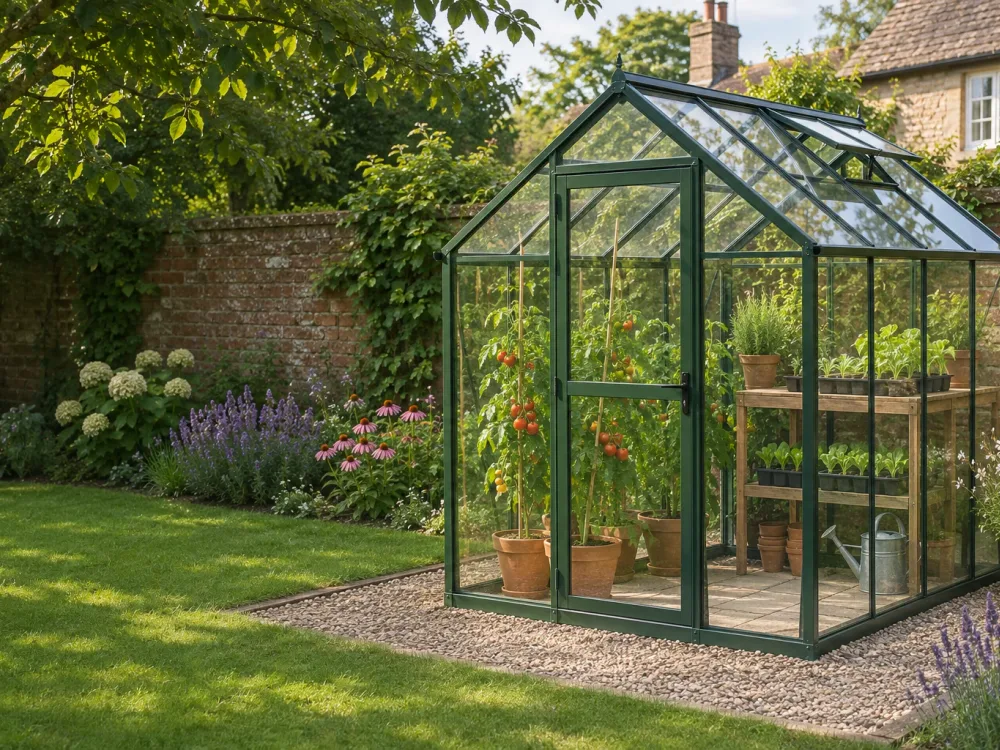
Low inlets and high outlets use rising warm air to support natural ventilation.
Book Your Free InspectionSimple stays let you set the opening yourself. They suit gardeners who can check conditions regularly, but vents must be adjusted when the weather changes and secured against strong wind.
Wax-cylinder openers expand as temperatures rise and retract as they cool, without mains electricity. Check the unit's opening temperature range, lift capacity, maximum travel and compatibility with the frame and vent.
Low-mounted louvres admit replacement air and work well with roof outlets. Manual, automatic and screened designs are available, although fine mesh can reduce airflow and needs to be kept clear.
A circulation fan moves air within the greenhouse and can reduce stagnant pockets around dense foliage. It does not necessarily exchange indoor air with outdoor air, so vents are still required.
An extractor provides powered air exchange when natural ventilation is inadequate. Selection depends on greenhouse volume, resistance from guards or shutters, power access and a safe installation suitable for damp conditions.
Wide openings can release heat quickly, particularly in calm weather. Consider secure catches, safe access and whether an opening needs insect mesh or another barrier.
Greenhouse shading reduces the solar energy entering or reaching the growing area. It is useful when ventilation alone cannot prevent sharp daytime temperature rises. External shade intercepts sunlight before it passes through the glazing, while internal blinds or screens are convenient to adjust but allow solar energy to enter first.
Shade netting is available in different densities and must be fixed so it does not chafe against glazing or obstruct automatic vents. Retractable blinds give more control during changeable weather. Removable shading compounds are applied to the outside of suitable glazing and later cleaned off according to the product instructions; always check compatibility with glass, polycarbonate, seals and frame finishes.
Avoid treating shade as a permanent summer setting. Seedlings, tomatoes, cucumbers, peppers and shade-tolerant foliage plants do not all want the same light conditions. Observe leaf colour, growth and midday wilting, then adjust ventilation, watering and shade rather than changing several variables blindly. Never drape loose material across a roof vent, because it can impede opening and place extra load on the mechanism.
The United Kingdom does not have one greenhouse climate. Coastal exposure, sheltered urban gardens, altitude and the direction of the glazing all affect conditions. A cool morning can become bright and warm quickly, while an exposed structure may need vent restraints and secure shade fixings when wind rises.
During sunny spells, check conditions before the greenhouse becomes uncomfortable rather than waiting for plants to wilt. Open low and high vents progressively, add shade where solar gain remains excessive and keep paths or staging from blocking inlet air. At night or during a cold spell, reduce unnecessary openings while retaining enough air exchange to prevent persistently wet conditions.
Condensation is a useful warning, but it is not a complete control measure. Water on glazing may come from humid air meeting a cold surface, wet compost, standing water or dense foliage. Water early enough for surfaces to dry, space plants where practical and remove dead material. A maximum-minimum thermometer records temperature extremes; a hygrometer adds relative-humidity readings. Place sensors near plant level and out of direct sun so the measurements are meaningful.
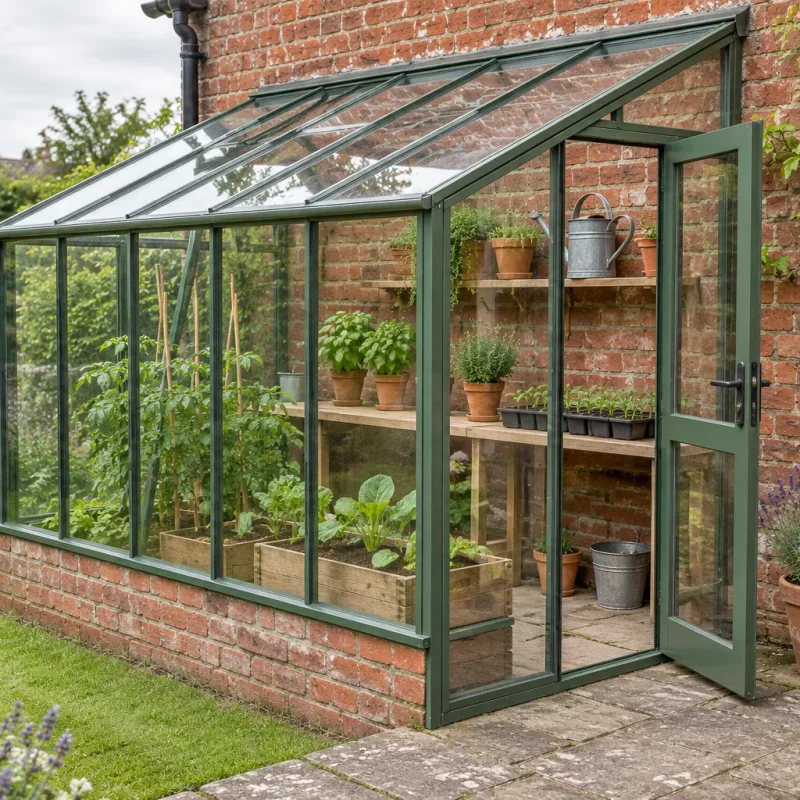
Measure conditions near the crop and shield sensors from direct sunlight.
Book Your Free InspectionNote internal dimensions, glazing material, roof orientation, existing vent positions and nearby walls, fences or hedges. Measure openings rather than relying solely on the advertised vent count.
List the plants, their seasonal timing and how densely the greenhouse will be filled. Young plants and established fruiting crops may need different airflow, shade and watering decisions.
Use low-level inlets with roof outlets where the greenhouse allows. Confirm that doors, vents and automatic openers can move freely without hitting shade cloth, staging or hanging baskets.
Choose automatic openers if daytime attendance is difficult, circulation fans for stagnant internal pockets, or extraction when powered air exchange is justified. Follow electrical and manufacturer safety instructions.
Record daily maximum and minimum temperatures during representative weather. Change one element at a time, inspect plants and check that vents close securely before windy or cold conditions.
Greenhouse Guide UK can help you compare vent layouts, opener specifications and shading choices before you commit to a greenhouse or accessory.
The useful opening area and vent position matter more than a simple vent count. Look for high roof outlets plus low-level inlets, then consider greenhouse volume, glazing, exposure and crop density. Manufacturer specifications may state dimensions or opening travel; compare those details rather than assuming every roof vent provides the same airflow.
Automatic openers are useful when you cannot adjust roof vents whenever the temperature changes. Common wax-cylinder models need no mains supply, but their temperature range, lifting capacity and mounting brackets must suit the vent and frame. They still need seasonal inspection, and they should not be treated as protection against every UK weather change.
External shading usually intercepts solar energy before it passes through the glazing, while internal shading is often easier to deploy and protect. The better choice depends on access, wind exposure, glazing compatibility and how often you need to adjust it. Keep all materials clear of roof vents and automatic opener mechanisms.
An open door adds a large low-level opening, but it is not a complete ventilation plan. Warm air still benefits from a high escape route, and an unattended door can admit animals or be caught by wind. Pair a secure door opening with roof vents and consider low louvres for more controlled airflow.
A circulation fan does not replace greenhouse vents because it mainly redistributes air already inside. An extractor can exchange indoor and outdoor air, but it needs correctly sized inlets and suitable electrical installation. Natural roof and low-level vents remain useful during power loss and when powered extraction is unnecessary.
Open vents may not clear condensation if outdoor air is damp, surfaces are cold or wet compost and foliage keep adding moisture. Improve air paths around plants, avoid standing water, water early enough for leaves and floors to dry, and use a hygrometer to track relative humidity. Persistent dripping also warrants a check for blocked vents, damaged seals or leaks.
Compare the dimensions and positions of vents, not only the number listed in the description. Check whether roof vents are included, whether low louvres are available, and whether automatic openers fit the frame. Greenhouse Guide UK uses sourced retailer and manufacturer specifications, but availability, compatibility and final purchase terms should be confirmed with the retailer.
Tell Greenhouse Guide UK about the greenhouse size, glazing, plants and exposure you are considering. We can help you make sense of ventilation and shading specifications before you choose.