
Useful internal dimensions
Check internal width, eaves height and ridge height as well as the external footprint. Sloping walls and roof braces can reduce room for staging and tall crops.
Serving United Kingdom & surrounding areas
Est. 2026
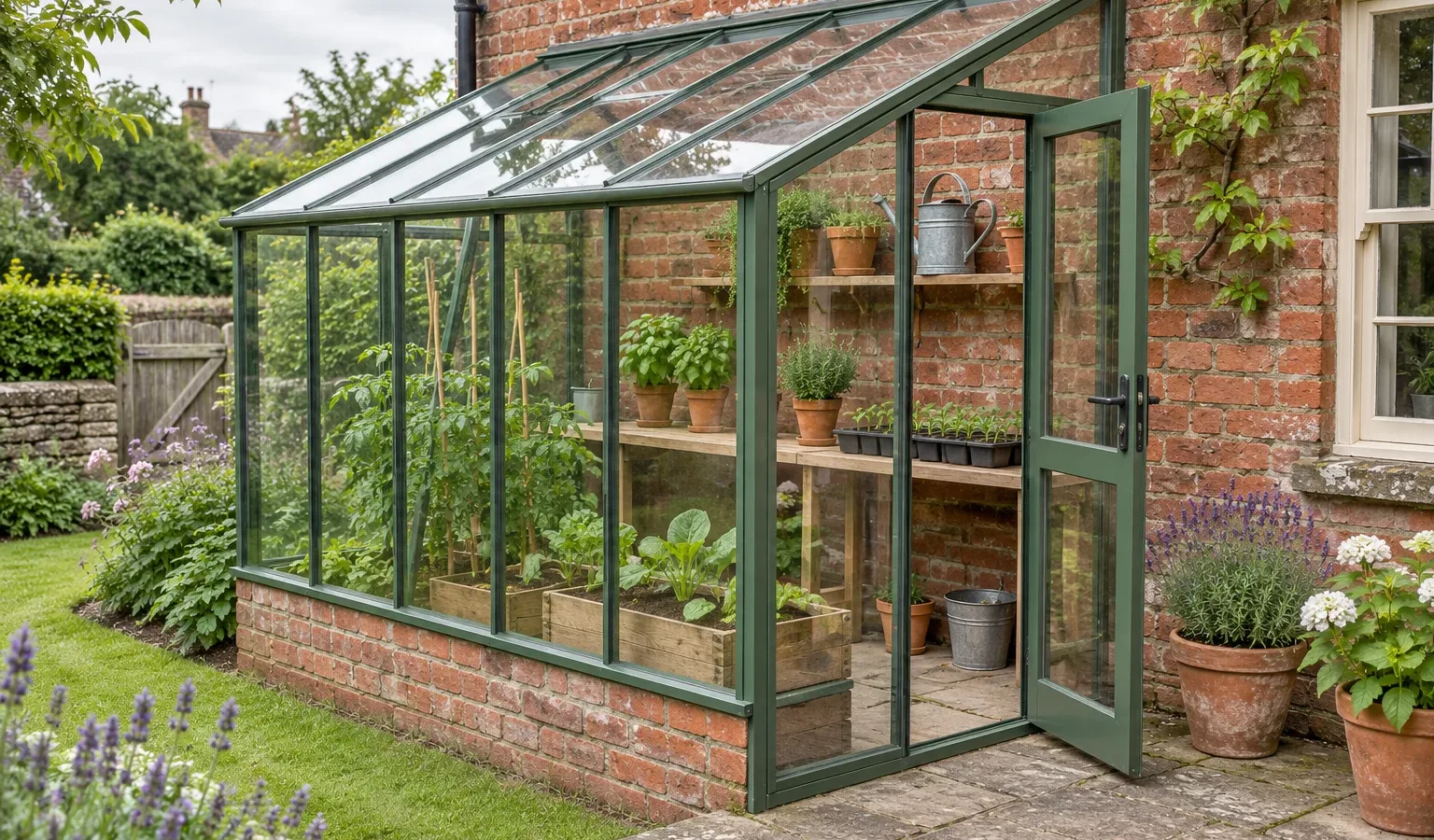
Compare compact designs by usable growing space, access, glazing and ventilation before choosing one for your UK garden.
Small greenhouses can extend the growing season, protect tender plants and provide a more controlled place for raising seedlings. The best choice is not necessarily the model with the smallest footprint. Door clearance, eaves height, staging depth and the space needed to reach every plant all affect how useful it will be.
Greenhouse Guide UK is an independent buying-guide and comparison business founded in 2026 by Stephen Meredith. We compare clearly sourced product specifications and explain how dimensions, frames, glazing, bases and vents affect everyday use. We do not sell, manufacture, install or deliver greenhouses. Any purchase takes place with the retailer.
Start by measuring the available plot rather than choosing a model from its nominal size. Record the width and length, then allow for the door to open and for a safe route around the outside. Check for fence panels, branches, sheds and roof overhangs that may obstruct glazing or vents. A level, stable position is preferable, while good daylight and shelter from severe wind are both worth considering. If your available area is less constrained, compare the wider range of greenhouses before settling on a compact format.
A small greenhouse is usually a walk-in structure with a rigid frame, glazed roof and enough internal room for staging or beds. Compact lean-to designs use a wall as one side, while narrow freestanding models can fit beside a path or at the end of a garden.
A mini greenhouse is commonly a low cold-frame style unit, a tall shelving cabinet with a clear cover, or a small glazed structure accessed from the front. These are useful where there is no room for an internal aisle. They suit seed trays, cuttings, herbs and a limited number of compact plants, but capacity can fall quickly once foliage spreads.
Walk-in access makes watering, tying in plants and cleaning easier, yet the aisle consumes part of the footprint. Front-opening mini models use their external dimensions more efficiently for shelves, although every tray must remain reachable through the doors or lid. Compare usable shelf area and headroom rather than relying on product names such as “mini”, “compact” or “starter”, which are not standard size classes.
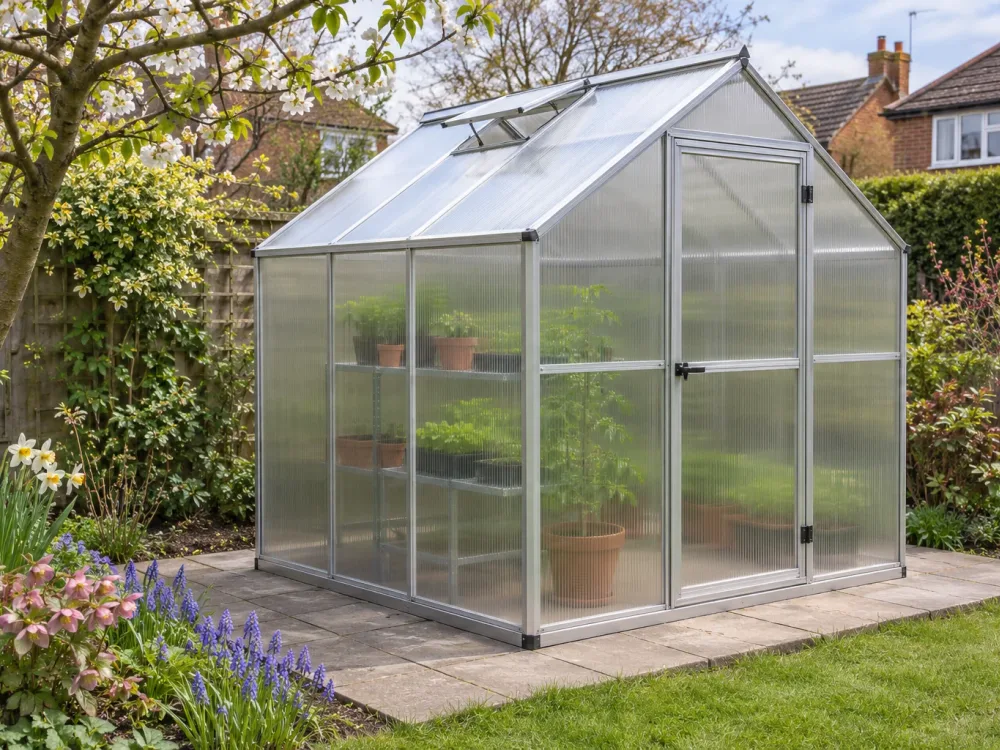
Check internal width, eaves height and ridge height as well as the external footprint. Sloping walls and roof braces can reduce room for staging and tall crops.
Confirm door width, opening direction and threshold height. Sliding doors avoid swing clearance, while hinged doors may offer a wider opening on some models.
Horticultural glass gives clear views but breaks into sharp pieces. Toughened safety glass is stronger and breaks into smaller granules. Polycarbonate is lighter and less prone to shattering, although clarity and panel construction vary.
Compact structures heat quickly in sunshine. Look for an opening roof vent, side or louvre ventilation where available, and enough door access to release hot air.
Aluminium is light and resistant to rust. Timber needs ongoing care but makes it straightforward to fix shelves or supports. Whatever the material, the frame must be square, level and firmly anchored.
Check whether staging, shelves, automatic vent openers, guttering and replacement glazing are compatible with the exact model. Accessories can reduce usable space if dimensions are tight.
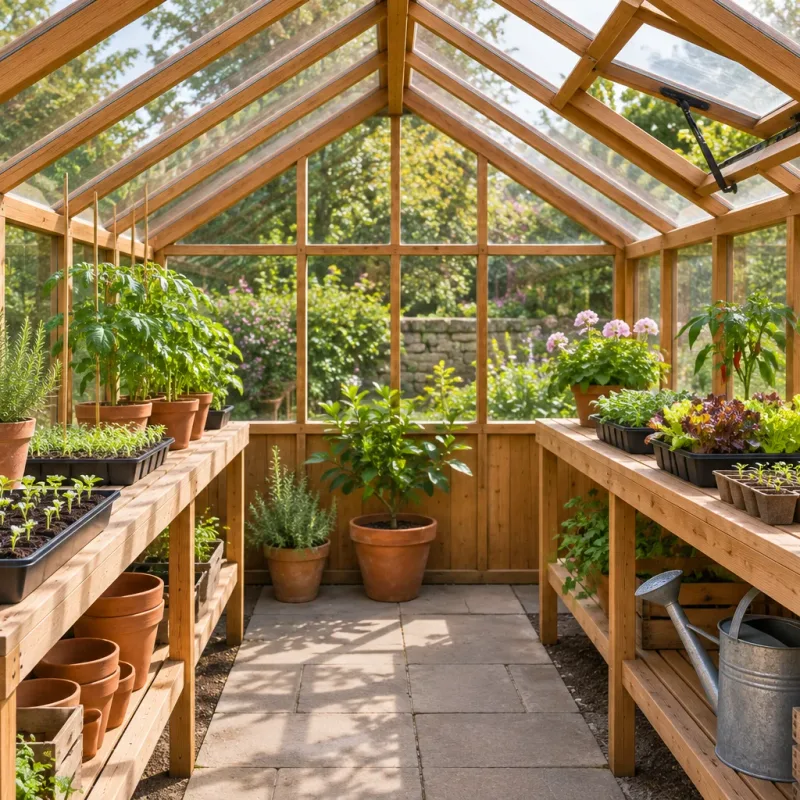
Sketch the interior at scale and mark an aisle, shelving and the mature spread of the plants you want to grow. Narrow staging can hold seed trays and pots without swallowing the walkway. High shelves are useful for propagation, but they may shade plants underneath. Removable shelves offer more flexibility when tomatoes, cucumbers or climbing beans need the full height later in the season.
For a walk-in model, make sure you can turn, carry a watering can and reach the rear corners. A central path with staging on both sides can work in a wider structure. In a very narrow greenhouse, staging along one side may leave better access and provide room for tall crops on the other. Avoid filling every surface on the first day; air needs to move around foliage.
A cold frame or cabinet-style mini greenhouse should open far enough for trays to be lifted out without tipping. If it has several shelves, compare the clear distance between them. Seedlings may fit in spring but quickly outgrow shallow shelf spacing. Positioning pots outside during warm weather can free capacity, provided tender plants are returned when conditions require it.
UK conditions can move quickly between cool, wet spells and strong sunshine. A small volume of enclosed air responds rapidly, so ventilation should be treated as a core specification rather than an optional extra. Opening the door helps, but a roof vent releases rising warm air even when the entrance cannot be left open. An automatic vent opener can respond to temperature without electricity, provided it is compatible with the vent and adjusted according to its instructions.
Single-sheet polycarbonate is light, while twin-wall polycarbonate has internal channels. The panel thickness, fixing method and UV-protected face should be checked against the manufacturer's specification. Light panels need secure clips or retaining systems, especially on exposed plots. Glass is heavier and requires careful handling. Toughened safety glass may be preferable where children, pets or regular garden activity increase the risk of impact.
Condensation is normal in an enclosed growing structure, but persistent moisture on leaves can encourage plant problems. Use vents, avoid overcrowding and water early enough for excess moisture to disperse. Clean glazing admits more light during the duller months. Remove algae and debris using a method approved for the glazing material, since abrasive tools or unsuitable cleaners can scratch polycarbonate or damage seals.
Record the available footprint and include room for the entrance, maintenance and safe access. Check the assembled external dimensions rather than relying only on the nominal size.
Separate tray-based propagation, shelf crops and tall plants. This reveals whether shelf area, headroom or bed space matters most.
Place frame material, glazing type, vent count, door opening, base requirements and included accessories side by side. Confirm whether dimensions are internal or external.
Consider daylight, nearby shade, exposure to wind, drainage and overhanging branches. Do not place a lightweight structure on an uneven or unsecured base.
Confirm delivery arrangements, package sizes, returns, warranties and whether assembly is included. Greenhouse Guide UK uses ordinary retailer references until any monetised relationship is approved and disclosed.
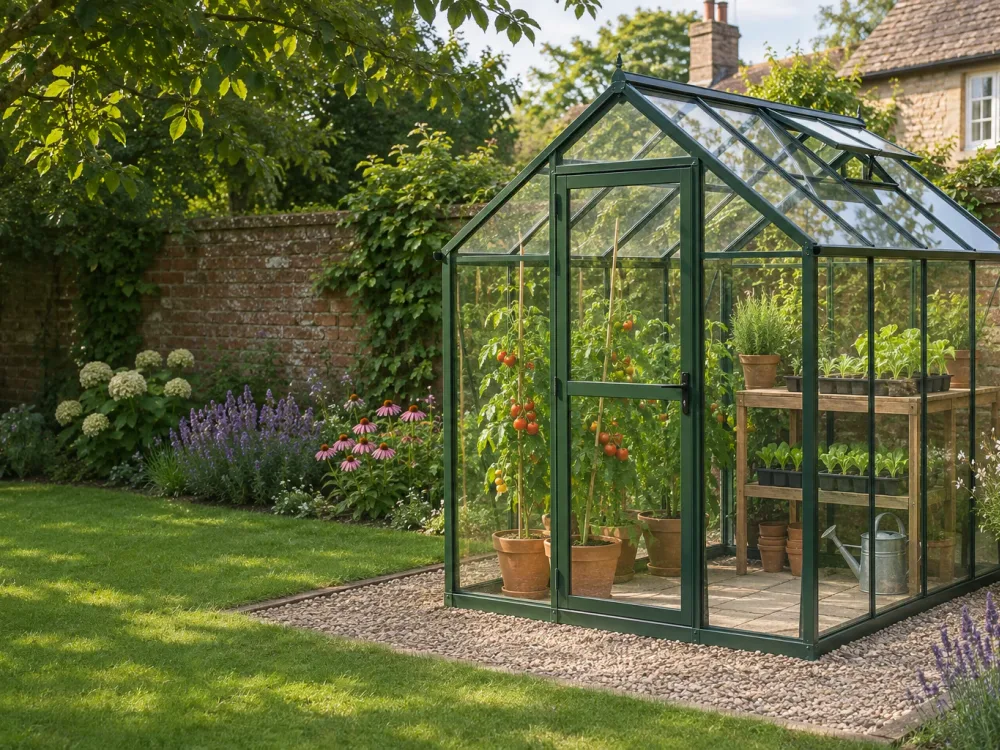
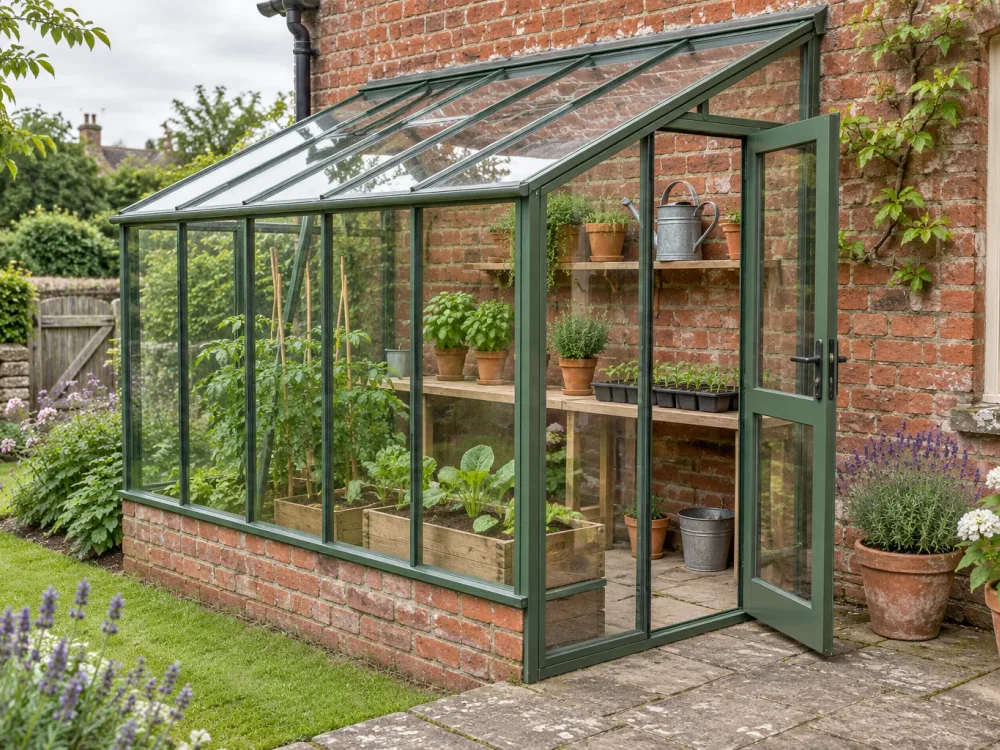
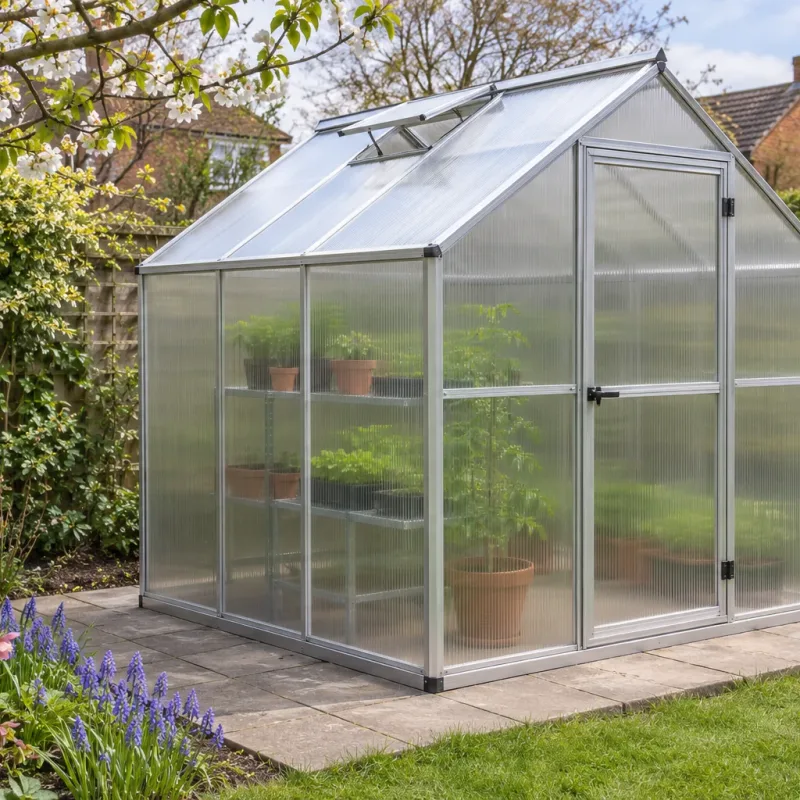
Choose the smallest size that still provides safe access and enough mature growing space for your intended crops. Measure the external plot, door clearance and route around the structure, then sketch the internal aisle and staging. Nominal dimensions do not always show the precise assembled footprint, so use the manufacturer's stated measurements.
A tall mini greenhouse can suit one or two compact tomato plants if it provides enough headroom, support, ventilation and access for watering. Shelf cabinets are generally better for seedlings and small pots unless the shelves can be removed. Check the mature height of the chosen variety rather than judging it by the young plant.
Neither material is best for every garden: glass offers clear visibility, while polycarbonate is lighter and resists shattering. Toughened safety glass breaks differently from horticultural glass, and twin-wall polycarbonate differs from a single sheet. Compare the exact panel specification, fixing system, replacement availability and the exposure of your plot.
A compact greenhouse needs a level, stable foundation and secure anchoring, even when a branded base is optional. Suitable arrangements vary by product and may include a proprietary metal base fixed to an appropriate foundation or a carefully prepared perimeter. Follow the manufacturer's requirements because an out-of-square base can affect doors, vents and glazing.
A mini greenhouse needs enough adjustable ventilation to prevent excessive heat and stagnant, humid air, but there is no single vent count suitable for every design. Internal volume, glazing, orientation and plant density all affect temperature. A roof vent is useful on walk-in models, while cabinet designs may rely on adjustable lids or doors.
A small greenhouse may be placed on a sound, level patio if the manufacturer permits that foundation and the structure can be anchored correctly. Check drainage, slab condition, fixing positions and door clearance before assembly. Do not assume the greenhouse's weight alone will keep it secure in exposed UK weather.
Greenhouse Guide UK does not sell, manufacture, install or deliver greenhouses. Stephen Meredith founded the independent comparison business in 2026 to help UK gardeners assess sourced specifications and understand practical differences. Purchases are completed with the chosen retailer.
Use the available footprint, intended plants and exact product specifications to create a shortlist that fits your garden and remains practical throughout the growing season.