
Panel retention
Check whether glazing slides into frame channels, uses clips or is secured with capping strips. The instructions should explain how panels are fitted and how exposed edges are finished.
Serving United Kingdom & surrounding areas
Est. 2026
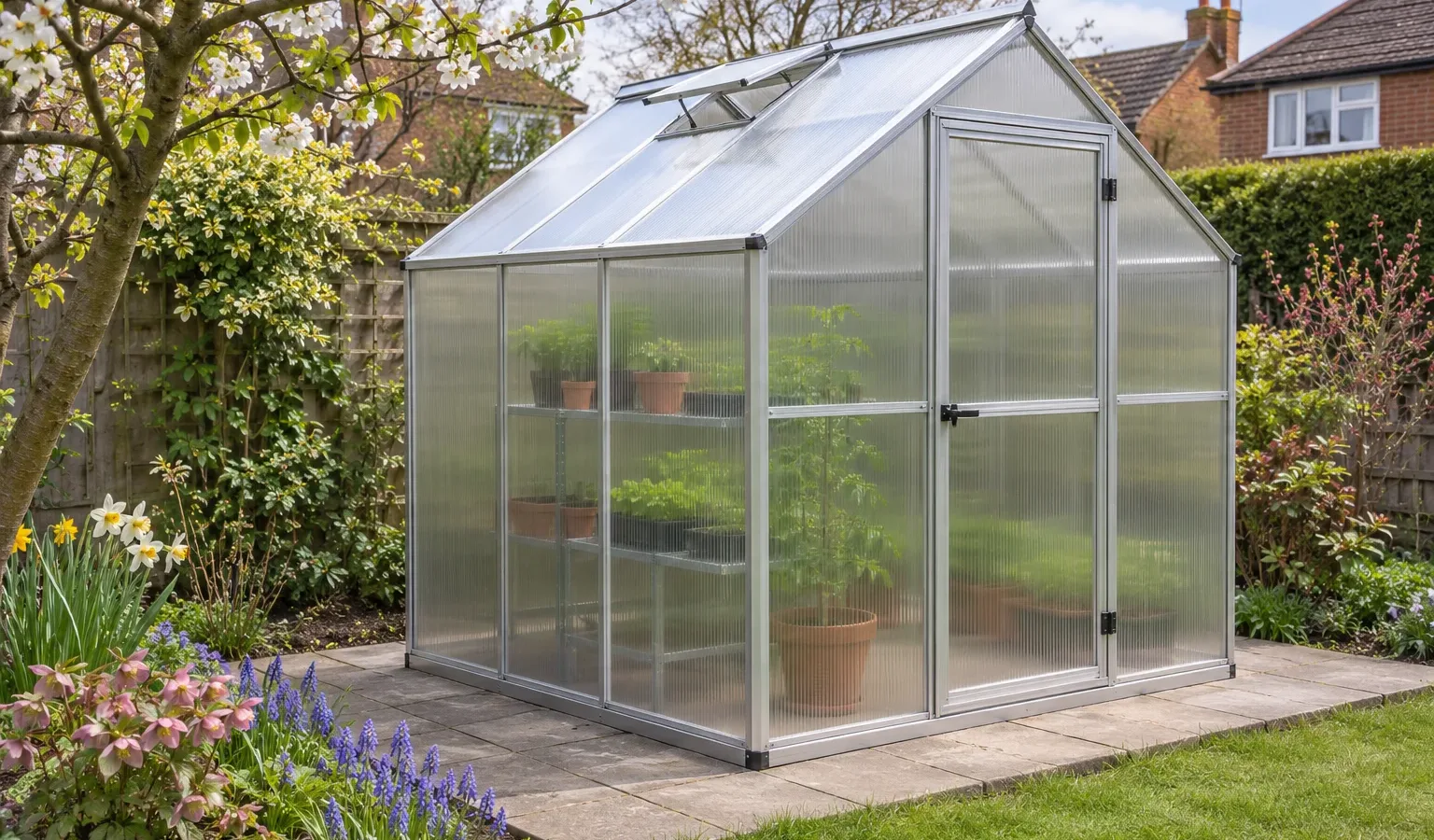
Compare glazing, frames, ventilation and base options with clear guidance for choosing a greenhouse suited to your garden and the UK climate.
A polycarbonate greenhouse can provide a practical growing space without the weight and breakage risk associated with horticultural glass. Yet models that look similar in photographs may differ in panel construction, frame strength, ventilation, door design and anchoring requirements. Those details affect how straightforward the greenhouse is to assemble and use.
Greenhouse Guide UK is an independent buying-guide and comparison business founded in 2026 by Stephen Meredith. We compare clearly sourced product specifications and explain what they mean for UK gardeners. We do not manufacture, sell, install or deliver greenhouses. Any purchase takes place with the retailer you choose, and ordinary retailer links are used because no affiliate partnerships are currently approved.
Start by deciding how you intend to use the structure. Seed raising, tender crops and overwintering containers can call for different layouts. Measure the available ground carefully, including room for the door, maintenance access and any roof vent or guttering. For a broader comparison of sizes and glazing materials, consider the main choices across greenhouses in the UK before settling on polycarbonate.
Polycarbonate glazing is sold in different forms, and the panel type is more informative than the word “polycarbonate” on its own. Twin-wall or multi-wall sheets contain internal flutes that trap air and diffuse sunlight. Clear solid sheets look more like glass but do not provide the same cellular construction. Always check the product specification rather than judging opacity from a photograph.
Panel thickness matters, but it should not be considered in isolation. Check whether the quoted dimension refers to the complete sheet, how the panel edges are retained and whether the channels need sealing tape or end caps. A well-retained panel is less likely to flex or work loose when the weather turns windy. Replacement availability also matters because panel dimensions and edge profiles are not necessarily interchangeable between brands.
Light transmission and thermal claims should come from the manufacturer or retailer specification. Diffused light can reduce sharp shadows across plants, while cellular sheets usually provide more insulation than single-sheet glazing. Actual growing conditions still depend on orientation, shade, ventilation and how well the structure is assembled.
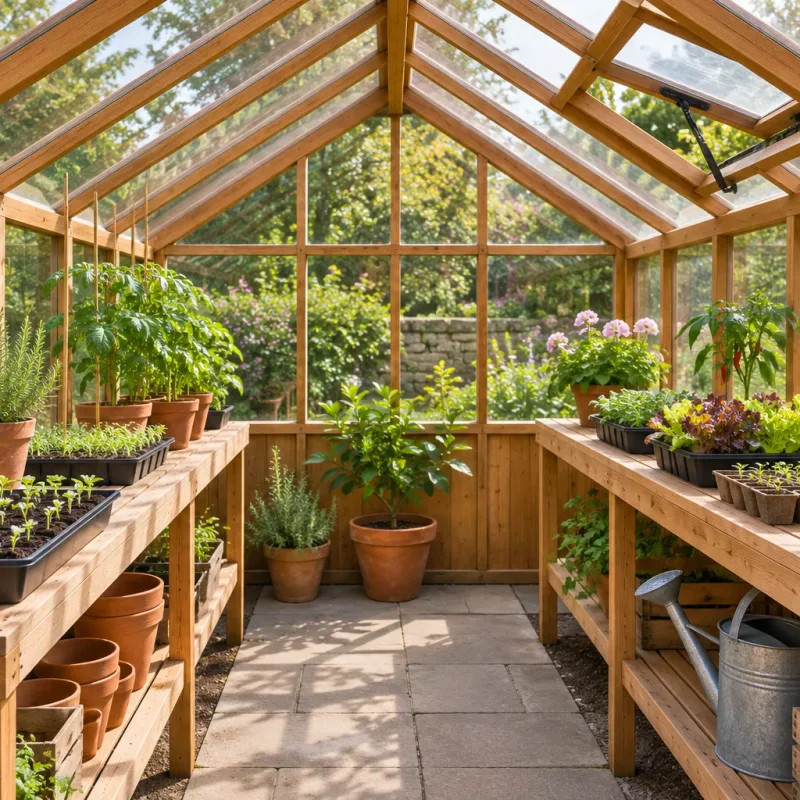
Check whether glazing slides into frame channels, uses clips or is secured with capping strips. The instructions should explain how panels are fitted and how exposed edges are finished.
Aluminium is light and corrosion resistant, while galvanised steel components may add stiffness in selected areas. Compare profile shape, bracing, corner joints and anchoring points rather than material names alone.
Look at the number, position and opening area of roof vents. An automatic vent opener may be included, offered separately or unsuitable for a particular vent, so confirm compatibility.
Compare the clear opening width, threshold and door mechanism. Sliding doors save swing space; hinged doors require a clear arc and secure catches.
Find out whether a metal base is included, optional or unnecessary. The greenhouse still needs a level, stable foundation and secure anchoring suitable for the chosen surface.
Check the warranty wording, exclusions, spare-panel availability and process for reporting missing or damaged components. Keep the model number and assembly documents.
Wind and persistent rain are practical considerations throughout the United Kingdom. A greenhouse in an open coastal garden faces different exposure from one sheltered by buildings and hedges. Retailer descriptions such as “strong” or “heavy duty” are not substitutes for stated specifications. Look for frame dimensions, included bracing, fixing details and any published wind or snow-load information. If no load rating is given, do not assume one.
Foundations have two jobs: keeping the frame level and helping it remain securely anchored. Suitable arrangements can include a prepared concrete slab, paving, a perimeter footing or another firm surface permitted by the manufacturer. Soil alone can settle and allow the frame to twist unless the model has a purpose-designed anchoring system. Timber may be used in some base arrangements, but it should be suitable for ground contact and installed in accordance with the greenhouse instructions.
Confirm the base dimensions before preparing the ground. The nominal size in a product name may not equal the precise external footprint. Check whether dimensions include gutters, door tracks or projecting anchor points. In exposed locations, obtain appropriate advice about the foundation and fixings rather than improvising after assembly.
A greenhouse gains heat quickly in direct sun, including on bright spring days. Roof vents allow warm air to escape, while lower-level openings or an open door admit cooler replacement air. This creates more effective air movement than relying on one small opening. Louvre vents can help at low level, but insect screens and closely spaced blades may reduce airflow.
Automatic openers use a temperature-responsive mechanism and normally operate without electricity. Their opening range, lifting capacity and fitting requirements vary, so match the opener to the vent. They are useful when nobody is present to adjust ventilation, but they do not remove the need to check plants and weather conditions.
Think about internal layout as well. Deep staging, tall crops and tightly packed pots can obstruct circulation. Allow a workable central path and check that shelves will not block louvres or prevent a roof vent mechanism from moving. If electricity, heating or irrigation is planned, use equipment suitable for the environment and seek competent advice for permanent electrical work.
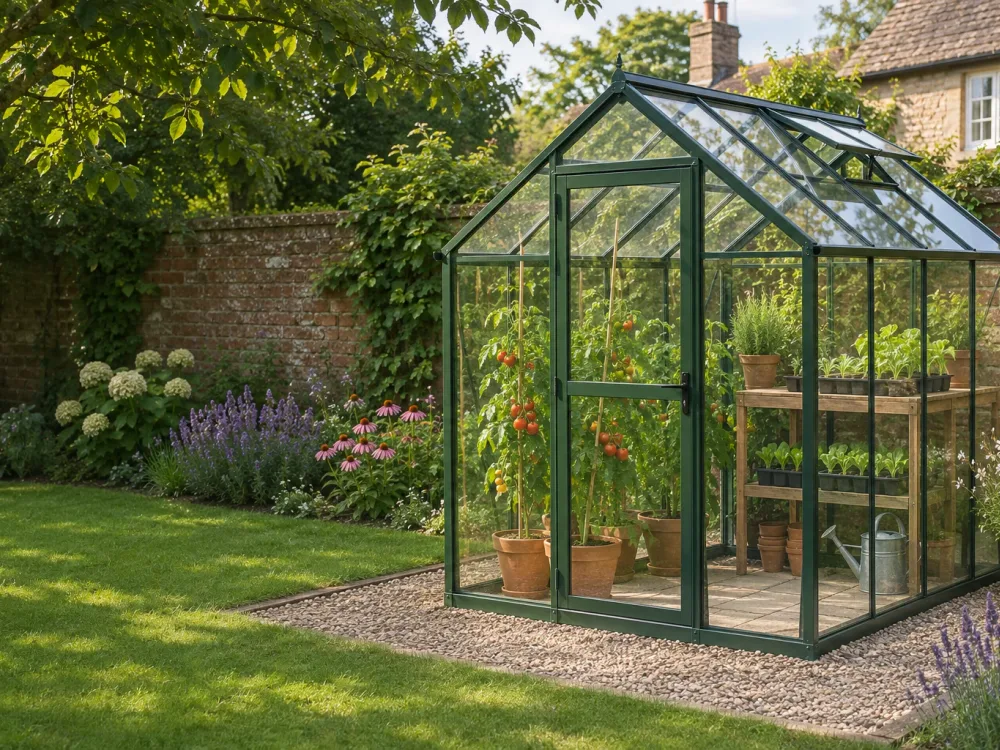
Record the maximum footprint and height, then account for boundaries, overhanging branches, door movement, gutters and access around the structure. Check whether local planning restrictions or property conditions apply before ordering.
List the crops, seasons and equipment you expect to use. Decide how much staging, open soil, container space and headroom the greenhouse needs.
Put exact dimensions, panel type and thickness, frame construction, vents, doors, base, accessories and delivery terms into one comparison. Exclude accessories that are pictured but not supplied.
Check the manual, parts list, tool requirements and foundation instructions before purchase where documents are available. Large panelled structures may need more than one person to assemble safely.
Review the seller's current price, stock status, delivery area, returns process and warranty wording. Confirm how transit damage or missing components must be reported.
Compare the specification that affects everyday use, not simply the headline size or promotional photograph.
Book Your Free InspectionThe advertised price is only one part of a polycarbonate greenhouse purchase. Compare what is actually included. A lower-priced model may exclude the base, automatic opener, louvre vent, shelving, anchors or delivery. Another may include some of those items but use a different panel specification. Build a total based on the greenhouse, required foundation materials, essential accessories and delivery to your address.
Delivery terms deserve close attention. Greenhouse kits can arrive as multiple long packages, and kerbside delivery may leave the buyer responsible for moving them to secure storage. Check package details where available and inspect deliveries in line with the retailer's instructions. Do not arrange assembly until all components have arrived and any reported damage has been resolved.
Maintenance costs are usually tied to cleaning, replacement glazing, vent openers, door hardware and fixings. Ask whether model-specific panels and seals can be purchased separately. Greenhouse Guide UK uses sourced specifications and original editorial explanations to make these differences easier to identify, but current prices, availability and contractual terms must always be confirmed with the retailer.
Choose panel thickness alongside panel construction, frame retention and the manufacturer's specification, rather than using thickness as the sole measure of quality. Twin-wall and multi-wall sheets contain internal flutes, while solid sheets behave differently. Compare like-for-like products and check whether replacement panels are available in the required dimensions.
A polycarbonate greenhouse may suit a windy garden only when the particular model, foundation and anchoring method are appropriate for the exposure. Check for published wind-load information, bracing, panel-retention details and fixing instructions. An open coastal plot needs more caution than a sheltered urban garden, and vague marketing language should not be treated as a structural rating.
It needs a level, stable foundation and secure anchoring, although a separate metal base is not required by every model. Follow the manufacturer's dimensions and foundation instructions. Confirm whether a base is included, optional or built into the frame before preparing concrete, paving or a perimeter footing.
The right ventilation provision depends on greenhouse size, orientation, exposure, crop density and door use. Compare the position and opening area of vents rather than relying on the count alone. Roof outlets work best with a source of cooler air lower down, such as a louvre, doorway or another compatible opening.
Direct placement on unprepared soil is unsuitable unless the manufacturer provides a specific ground-anchoring method for that model. Soil can settle, causing the frame to move out of square and doors or panels to bind. Prepare the stated footprint accurately and use the prescribed anchors and fixings.
Assembly time varies with greenhouse size, frame design, foundation readiness, weather and the installers' familiarity with kit construction. Read the manual before delivery, sort and identify every component, and allow for more than one person where the instructions require it. Avoid handling large panels during windy conditions.
No. Greenhouse Guide UK is an independent buying-guide and comparison business and does not sell, manufacture, install or deliver greenhouses. Purchases are completed on the chosen retailer's platform, where the current price, availability, delivery and contractual terms apply.
Use Greenhouse Guide UK's independent comparisons to weigh panel construction, frame design, ventilation, foundations and retailer offers before deciding which model fits your garden.